
AN APPROACH STIMULATING THE COMPETITIVENESS AND SUSTAINABLE DEVELOPMENT OF ACADEMIC INSTITUTIONS: IMPLEMENTATION AND RESULTS
Svilen KunevORCID iD: 0000-0001-8726-935XUniversity of Ruse “Angel Kanchev”, Bulgaria
Diana AntonovaORCID iD: 0000-0002-6060-6974University of Ruse “Angel Kanchev”, Bulgaria
Svilena RuskovaORCID iD: 0009-0005-2449-5639University of Ruse “Angel Kanchev”, Bulgaria
https://doi.org/10.53656/igc-2024.30

Pages 346-356
Abstract. The article presents a methodical approach aimed at stimulating career development and improving the quality of life of scientists and employees in an academic environment. For this purpose, an author's concept was built for the integration of representatives of interested parties in the definition of problem areas, the development of measures and solutions supporting working conditions and career development. The testing was carried out in real conditions in 2024 at Ruse University "Angel Kanchev". The results of the fieldwork are divided into five thematic directions and support: improving the conditions for career and personal development of those employed in an academic environment; increasing social responsibility towards employees and society on the part of universities, adapting to modern requirements and guidelines of strategic documents at the national and European level, stimulating the competitiveness and sustainable development of academic institutions.
Keywords: career development; quality of life; academic development
JEL: I23, I31, O15
- Introduction
Although several theories deal with either the individual or the collective dimensions of research careers and learning within specific disciplinary boundaries (psychology, human capital economics, management, artificial intelligence management, etc.), others consider a combination of the two, from a cross-disciplinary perspective. Among these attempts, the concept of the "career anchor" is defined as a combination of three components: a process of awareness of one's own talents and abilities, which are constructed through professional successes; developing individual motivation and individual needs; self-perceived values and attitudes resulting from interaction with organizational culture (Ford, 2021; Biolcheva & Sterev, 2024). Adam Sheingate (Fioretos et al., 2016) suggests eight types of career anchors: based on security/stability; based on autonomy/independence; based on the way of life (life style); based on technical/functional competencies; on the basis of general management competencies; based on entrepreneurship and creativity through age (Todorova, 2024); of the service or dedication to a particular cause; based on pure challenge (When Engagement Doesn’t Lead to a Wedding, 2007; Cloud, or Silver Linings, 2007; Dunn, 2020). Each individual builds his career by referring to one or several "career anchors" that take on a structured form after some initial work experience. Beyond the classic distinction between an “objective” career (defined by academic organizational policies and community concepts) and a “subjective” career (a personal perception of one's career path), career anchors can remain strong and stable throughout the work experience even if drastic changes in both objective and subjective careers, strategies and policies of educational academic structures.
- Methods and materials used in approach application
The type of invited participants is corresponding to the general goal of the approach and covers the following areas (Table 1):
Table 1. Types of participants from area domains and specific organisations
| Area domain | Relevant specific organisations in the area |
| Academia and research | · Academics from Research Funding Organizations
· academics from Research Performing Organizations · Representatives of relevant to the topic projects · Representatives of the University (internal staff and students) |
| Government & public sector (policy makers) | · Representatives of the local authorities
· Representatives of the regional authorities · Representatives of the national authorities |
| Industry & business | · Representatives of start-up incubators
· Representatives of STEM related companies |
| Civil society | · Representatives of start-up incubators
· Representatives of STEM related companies |
| Media | · Media representatives |
The specific event for application of the approach is aimed at promoting how equal opportunities of men and women can unlock their research potential, stimulating the career development and improving the quality of life, and also boosting the performance of the academic organizations. Indicators for success of the event are attendance of the workshop, emerging a discussion, emerging new cooperations. The custom designed event structure includes the following elements: (1) registration of invited participants, (2) opening session with defining the event goal, (3) presentation of the thematic scope and clarification of the topic characteristics, (4) group discussions on the need for equal opportunities of men and women for career development and improving the quality of life in academic context, (5) presentation of equality plan measures already undertaken in an academic organization in order to receive feedback and new ideas for improvements, (6) discussion on the defined measures and options for cooperation with stakeholders in the specific dimension.
The core element in the event structure in the team-working session with all the present stakeholder representatives. It is done under the approach “World Café”, which is intentionally chosen - it is useful and interesting in that it allows shared team work to formulate innovative ideas, but it builds on other familiar brainstorming methods by adding a phased rotation of the teams on the discussed problems to achieve higher quality of proposed solution ideas. The team of the Department of Management and Social Activities, organizer of the event and coordinator of the activities of the ATHENA project, has been applying this approach for nearly a decade to stimulate university-business links, to support the professional development of its students, as well as to implement the HEInnovate concept of European Commission for the formation of entrepreneurial universities with strong applied and research activity.
In this stage the representatives of the different types of stakeholders are grouped in teams (tables) and are asked to elaborate decisions and ideas on pre-defined topic, relevant to the main one. Here, a specifically designed instrument for supporting team decision-making is applied. It includes the problem addressed, the idea definition, the idea components, the ways of collaboration with academia, other comments. Figure 1 represent the visual design of the instrument.
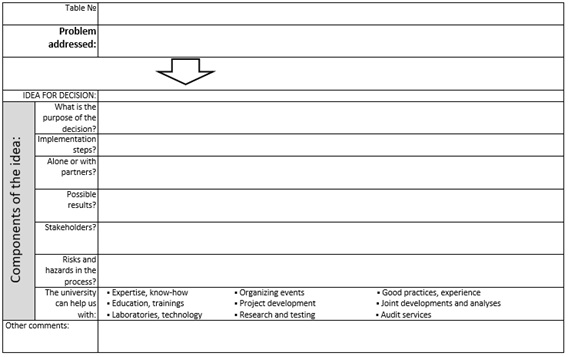
Figure 1. Tailored-made instrument for supporting team decision-making
- Results and discussion
Academia and Research:
– academics from Research Funding Organizations: 1
– academics from Research Performing Organizations: 2
– representatives of the University (internal staff and students): 13
Government & public sector (policy makers):
– representatives of the local authorities: 2
– representatives of the national authorities: 1
Industry & business: representatives of STEM related companies: 15
Civil society: representatives of associations, related to Equality, Career development: 2
In Stage One the goal of the event, the topic background and previous experience and achievements in the specific domain are presented to the participants. This is a triggering point for the next stage and stimulates the participants to think innovate and cooperate. Figure 2 shows a moment from that stage.
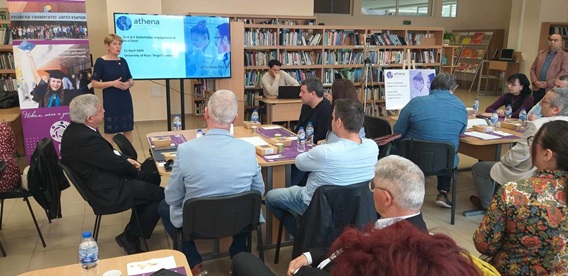
Figure 2. Stage One – topic background and goal setting of the eventIn Stage Two teams of participants are formed to discuss specific question, relevant to the general topic. Those questions derive from the resluts, achieved withing the consorcium of Horizon project ATHENA, in which the University of Ruse “Angel Kanchev” is an academic partner from Bulgaria. Six groups are formed by the organisers and in each of them includes representatives of the different sakeholders are included to analyze and formulate solutions on the issues related to:
– access to career development opportunities,
– occupation of professional positions and economic independence;
– determination of remunerations, additional material incentives and scholarships;
– stimulating participation in management decision-making;
– building a harmonious working environment;
– overcoming stereotypes in various spheres of public life.
The above mentioned topics are not initially announced to the teams in the beginng, they get their discussion questuion just after the guidance rules are presented and explained by the moderator. Then the discussion in each team starts within the preanounced time limit of 20 minutes and by using the instrument, displayed in Figure 1. The next Figure 3 demonstrates moments from the teams’ working session.
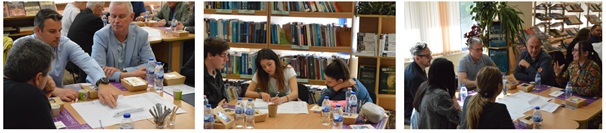
Figure 3. Stage Two – teams’ discussion during approbationIn Stage Three each team presents its idea, aimed to form a solution for the discussion question. The time limit is one minute per team, which they use to orally represent the solution and its main components. The aim here is to focus on the feasibility, effectiveness and organisational and social impact of the suggested solution. Figure 4 displayes the ideas presenation and exchange of comments among teams.
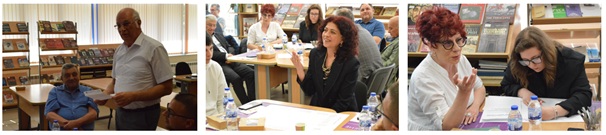
Figure 4. Stage Three – ideas presentation and World Café exchange of opinionsIn Stage Four two activities are implemented - presentation of equality plan measures already undertaken in an academic organization so that the participants are fostered to share their feedback and new ideas for improvements, and this contributes for the discussion on the defined measures and options for cooperation with stakeholders in the specific dimension. Figure 5 shows moments from the closing discussion.
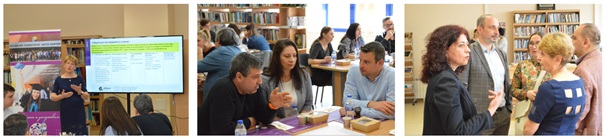
Figure 5. Stage Four – academic experience and discussion for improvementsAdditionally, all the participants are asked to fill-in a customly designed individual assesment and feedback form, paper based, annonimously. The form has several sections: general assesment of the event, core features of event, aspects of event organisation, eventual future participation in similar initiatives, demographic questions, recommendations. All the questions, except demographic and recommendations, use 5-step Likert scale for assesing level of agreement or level of performance. Figure 6 represents the initial qualitative statistical calcuations per main features of the event by type of stakeholders and general average for the whole audience. The scale starts from 1 – very weak, to 5 – very good.
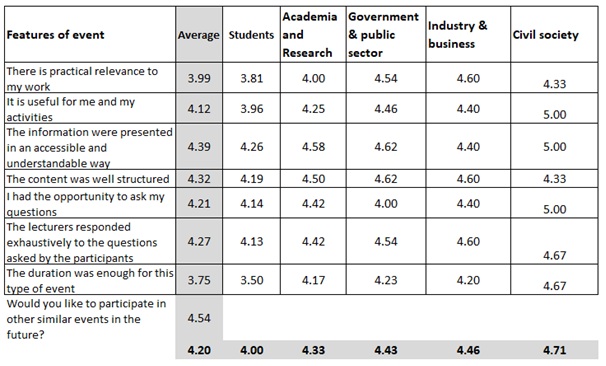
Figure 6. Assessment of the approach core features from approbationResults show that the general evaluation of the approbation event is above good (4,20), with the maximum grading of accessibilty and uderstandable information (4,39). Some adjustments could be made in the event duration since its score is not so high (3,75). The distribution of opinions among types of stakeholders show that the highest grading is of the civil society representatives (4,71), followed by industry and business participants (4,46), government and public sector participnats (4,43). A little bit more critical are the students (4,00), but their assessment is also good. A very stimulating result is that for the readiness for futute participation in similar events – colse to the maximum (4,54). This might be an evidence that the here presented approach is well constructed, applicable in practical environment and with high level of inclusiveness of representatives of interested parties.
- Conclusion
The practical approbation of the authored methodology, done in 2024 at University of Ruse “Angel Kanchev” allowed obtaining results into five thematic directions – access to career development opportunities, occupation of professional positions and economic independence; determination of remunerations, additional material incentives and scholarships; stimulating participation in management decision-making; building a harmonious working environment; overcoming stereotypes in various spheres of public life. The suggested solutions in the five directions by the participants with applying the specifically designed instrument for supporting team decision-making are relevant to and support: improving conditions for career and personal development of those employed in an academic environment, increasing social responsibility towards employees and society on the part of universities, adaptation to current requirements and guidelines of strategic documents at the national and European level, stimulating of the competitiveness and sustainable development of academic institutions.
The approbation evaluation, done with a a customly designed individual assesment and feedback form calcuations per main features of the event and by type of stakeholders, show that some minor changes in the approach – ex. timing and ways for motivating individual participants in sharing opinion in discussion round, might be needed. In general, consequentive appliacation of the approach in different problem areas in the future will be valuable for validating its internal structure and process design and would contribute to precise measuring of its effectivess and success indicators.
Acknowledgement
This study represents results achieved from the project 101006416-ATHENA-H2020-SwafS-2018-2020 and publishing in the present paper is financed by the European Union-NextGenerationEU, through the National Recovery and Resilience Plan of the Republic of Bulgaria, project № BG-RRP-2.013-0001-C01.
REFERENCES
Atanasova, D. & Venelinova, N. (2022). Comparative Analysis of Decision-Making Models in National Healthcare Systems of EU Member-States: Change-Drivers’ Identification. In S.S. Sotirov at al. (Eds.), Contemporary methods in bioinformatics and biomedicine and their applications (BioInfoMed 2020) (pp. 3 – 15). https://doi.org/10.1007/978-3-030-96638-6_1
Biolcheva, P. & Sterev, N. (2024). A Model for Calculating the Indirect Added Value of AI for Business. Strategies for Policy in Science and Education, 32(3s), 9 – 17, https://doi.org/10.53656/str2024-3s-1-mod
Cloud, or Silver Linings? (2007, July 26). The Economist. https://www.economist.com/briefing/2007/07/26/cloud-or-silver-linings
Deneva, A, Hristova, V., Pavlov, D., Blazheva, V., Kostov, I., Angelova, D. & Petrova, M. (2022). The Geographical Location as a Limitation for Starting Entrepreneurial Initiatives and Career Development. European Journal of Sustainable Development, 11(3), 124-136, https://doi.org/10.14207/ejsd.2022. v11n3p124
Dunn, R. (2020, September 7). The Changing Labour Landscape. Linkedin. https://www.linkedin.com/pulse/changing-labour-landscape-prof-rory-dunn
Ford, M. (2021). Rule of the Robots: How Artificial Intelligence Will Transform Everything. Basic Books.
Gueorguiev, T. & Kostadinova, I. (2021). ISO Standards Do Good: A New Perspective on Sustainable Development Goals. In Proceedings of the 13th International Joint Conference on Knowledge Discovery, Knowledge Engineering and Knowledge Management, Volume 3 (pp. 133 – 137). https://doi.org/10.5220/0010658000003064
Ion, A-E. (2020). A Perspective on the Human Cloud Industry. Proceedings of the International Conference Economic Scientific Research - Theoretical, Empirical and Practical Approaches (ESPERA 2020), 384 – 400. https://doi.org/10.2478/9788366675261-026
Krugman, P. (2020). Arguing with Zombies: Economics, Politics, and the Fight for a Better Future. W. W. Norton & Company.
Lee, A. (2023, Mart 4). Could the Next Great Author be a Robot? We Asked (Human) Writers. The New York Times. https://www.nytimes.com/2023/03/04/style/pen-america-awards.html
Modise, M. (2023). The Impacts of Employee Workplace Empowerment, Effective Commitment and Performance: An Organizational Systematic Review. International Journal of Innovative Science and Research Technology, 8(7), 3435 – 3457.
Molhova, M. & Biolcheva, P. (2023). Strategies and Policies to Support the Development of AI Technologies in Europe. Strategies for Policy in Science and Education, 31(3s), 69 – 79. https://doi.org/10.53656/str2023-3s -5-str.
Fioretos, O., Falleti, T. G. & Sheingate, A. (Eds.). (2016). The Oxford Handbook of Historical Institutionalism. Oxford University Press.
Schwab, K. (2021). Stakeholder Capitalism: A Global Economy that Works for Progress, People and Planet. Wiley.
Sterev, N. & Milusheva, V. (2023). Competitiveness of Textile Producers in Digital Business Era. Strategies for Policy in Science and Education, 32(3s), 29 – 41. https://doi.org/10.53656/str2024-3s-3-com
Todorova, A. (2024). Examining Emotional Intelligence Evolution with Age: Insights from Bulgarian Digital Entrepreneurs of Different Generations. IIMT Journal of Management, 1(1), 5-23. https://doi.org/10.1108/IIMTJM-12-2023-0075
World Economic Forum. (2023). Future of Jobs Report: Insight Report. https://www3.weforum.org/docs/WEF_Future_of_Jobs_2023.pdf
When Engagement Doesn’t Lead to aWedding. (2007, October 25). Financial Times.