
COVID-19 OPPORTUNITIES – BULGARIAN WOMEN: WORK-LIFE BALANCE, OBESITY AND STRESS
Резюме. Obesity is named the scourge of late \(20^{\text {th }}\) and early \(21^{\text {st }}\) centuries. It contributes to many chronic diseases. The prognosis is that it will only become a bigger problem in the near future. This research is aimed at studying the habits and mental state of busy working Bulgarian women aged \(35-65\) who are obese and are living abroad and the holistic approach towards their condition. We used Google form surveys to identify the knowledge, habits, and the state of mind of twenty-two obese Bulgarian women living in eleven different countries during the COVID-19 pandemic. \(86.4 \%\) of the participants have one or more kids and \(81.8 \%\) are in the workforce. Most of the working mothers declare that due to the demanding lives they lead, they often neglect their health and general wellbeing. Furthermore, 100% of the participants are stressed, obese and most of them have chronic illnesses. We found that all of the respondents are aware of their weight problem, and they describe their physique as above normal. We found that the majority of them are not involved in any kind of physical activities or sports, which could help them alleviate their stress. Only a small number of them have ever tried meditation or any other holistic approach towards becoming healthier and happier human beings. Our research shows that women in developed countries are working long hours and also are habitually engaged with housework. In our opinion, they accumulate stress, which in turn is the reason for them being overweight, encumbered by various illnesses and feeling unhappy. Furthermore, we found a strong and significant correlation between the forced isolation and improvement of lifestyle choices and health.
Ключови думи: obesity; stress, health; chronic illnesses; work-life balance
Introduction
Obesity is a global public health challenge that increases the risk of various diseases including type 2 diabetes mellitus, hypertension and cancer, and could cause further increases in the incidence of chronic disease in the long term (Foss, Dyrstrad, 2011). There is a global rise in the number of people with obesity, such that it now represents one of the major health challenges. (Brown, Wimpenny, 2011) Worldwide, over 1.9 billion people are obese \({ }^{1)}\). Almost half of Bulgarians over 50 years of age suffer from overweight, and a quarter from obesity (Markova, Yordanova, 2019). Obesity remains a major health concern for countries across Europe. Despite efforts through multiple initiatives and actions, the epidemic remains on the rise (Cuschieri & Mamo, 2016). Obesity is associated with decreased expiratory reserve volume, functional capacity, and respiratory system compliance. (Dietz & Santos-Burgoa, 2020). A recent Journal of the American Medical Association viewpoint regarding fatalities in Italy associated with the new coronavirus (COVID‐19) pandemic failed to mention obesity as one of the pre-existing diseases associated with death (Onder, Rezza, Brusaferro, 2020). Psychosocial work stress has been linked to a higher risk of type 2 diabetes (T2DM), with the effect being consistently higher among women than men (Heraclides et al., 2012). Chronic exposure to environmental stress may play a role in the development of obesity, through hyperactivation of the hypothalamicpituitary-adrenocortical (HPA) axis (Vicennati et al., 2012). Chronic stress can also lead to increased food intake in both animals and human beings, particularly women (Adam & Epel, 2007). According to Fink, 2016, “numerous studies show that job stress is by far the major source of stress forAmerican adults and that it has escalated progressively over the past few decades” (Fink, 2016). Among collegeeducated women with family, those with a career spend a larger share of their day unhappy, sad, stressed and tired. (Bertrand, 2013). Emotional states and situations can affect food intake (Geliebter, Aversa, 2002). Lack of leisure and time to self, have been found to be major stressors for mothers (Currie, 2007). Work-life balance is not only a psychological but also a social phenomenon. By introducing telework as a form of employment, opportunities for reconciling parenting and job roles are enriched. (Yordanova, 2020). Mindfulness-based interventions, combined with other traditional weight-loss strategies, have the potential to offer a long-term, holistic approach to wellness. (Godsey, 2013).
Aim of study
This research is aimed at studying the habits and mental state of busy working Bulgarian women aged \(35-65\) who are obese and are living abroad and the holistic approach toward their condition.
Objectives of the study
1. To recruit participants and assign them randomly into two groups.
2. To prepare a survey battery and deliver it through the Google survey app.
3. To measure the Body mass index (BMI) of the participants using an online calculator.
4. To conduct in-depth interviews with the participants from online survey and analyze the results.
Subjects of the study were Bulgarian women living abroad in 11 different countries. They were randomly assigned into two groups – one experimental and one control. Both groups contained 11 participants.
The relatively small size of the groups allowed us to analyze subjects’ physical and psychological reasons behind their condition and gave us the opportunity to allocate more attention to each individual.
This study is part of a bigger research (a PhD thesis) on the opportunities that a complex holistic methodology could potentially focus on improving the overall wellbeing and health of sedentary working women. Due to article volume restrictions, here we represent part of our results but comment on the survey as a whole.
This study is envisioned to take 12 weeks between June and August 2020.
Methods
Body mass was measured by a standard Tanita scale with an accuracy of 0.1 kg. These scales are popular and easy to access in many fitness facilities around the globe. BMI was calculated as the ratio between body mass in kilograms and the second power of body height in meters:
\[ B M I=\tfrac{\text { body mass }}{\text { body height }^{2}} \]
Each participant was provided with a link to an online BMI calculator and the results were included into the questionnaire. We used this data to access subjects’ level of obesity and compare it to their self-awareness of the problem revealed through their answers.
To measure the stress, knowledge and awareness of the participants we used the Google form questionnaire. The questionnaire contained 41 questions in total. In this article we represent the answers on 8 of them. The results were processed and illustrated by Microsoft Excel application. Information from the in-depth interviews was also used within the analysis.
Results
\(100 \%\) of the participants answered that they feel extremely motivated or rather motivated to participate in this research and to analyze their habits in order to achieve healthier and happier less stressed lives. (Figure 1)
As shown in Figure 2, a large percentage (86.4 %) of the participants have children. That could not lead to a definite conclusion whether being a parent or not leads to increased levels of stress and therefore being overweight and obese. The following interviews, however, revealed that the extra responsibilities of looking after their children is a significant factor contributing to the women’s state of overwhelm and lack of time to take care of their mental and physical health.
Figure 1. Motivational level of the participants for participating in the study
Figure 2. Parental status of the participants
According to our questionnaire, more than \(90 \%\) of the women are either working or actively involved in taking care of their household. Again, based on the ongoing interviews, this workload deprives them of time and opportunities to take care of themselves.
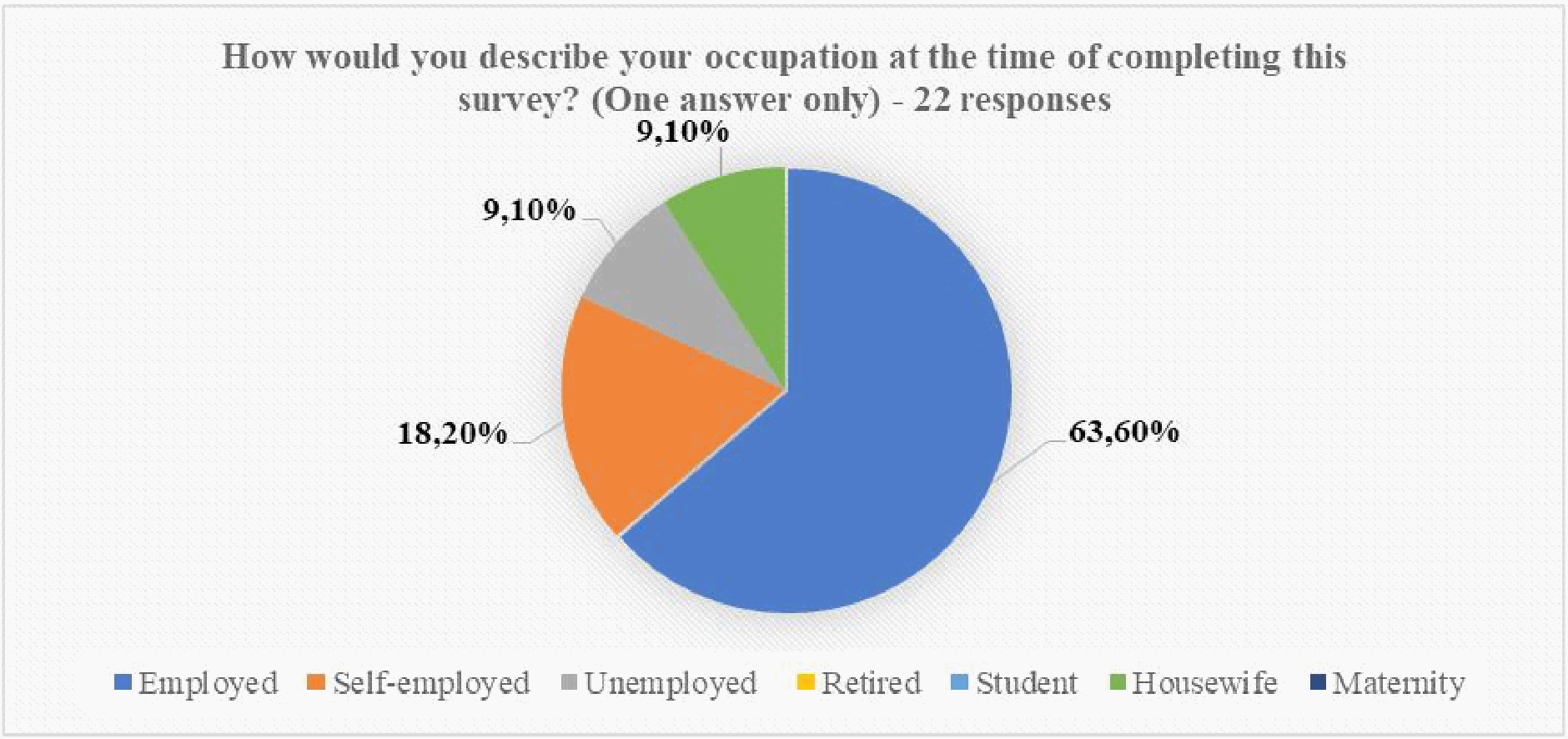
Figure 3. Social demographic block
All respondents are aware of their weight problem and described their physique as being above normal. Despite their knowledge of the alarming state of their physical condition, none of them, until the COVID-19 caused lockdown, were able to take any significant measures to rectify the problem.
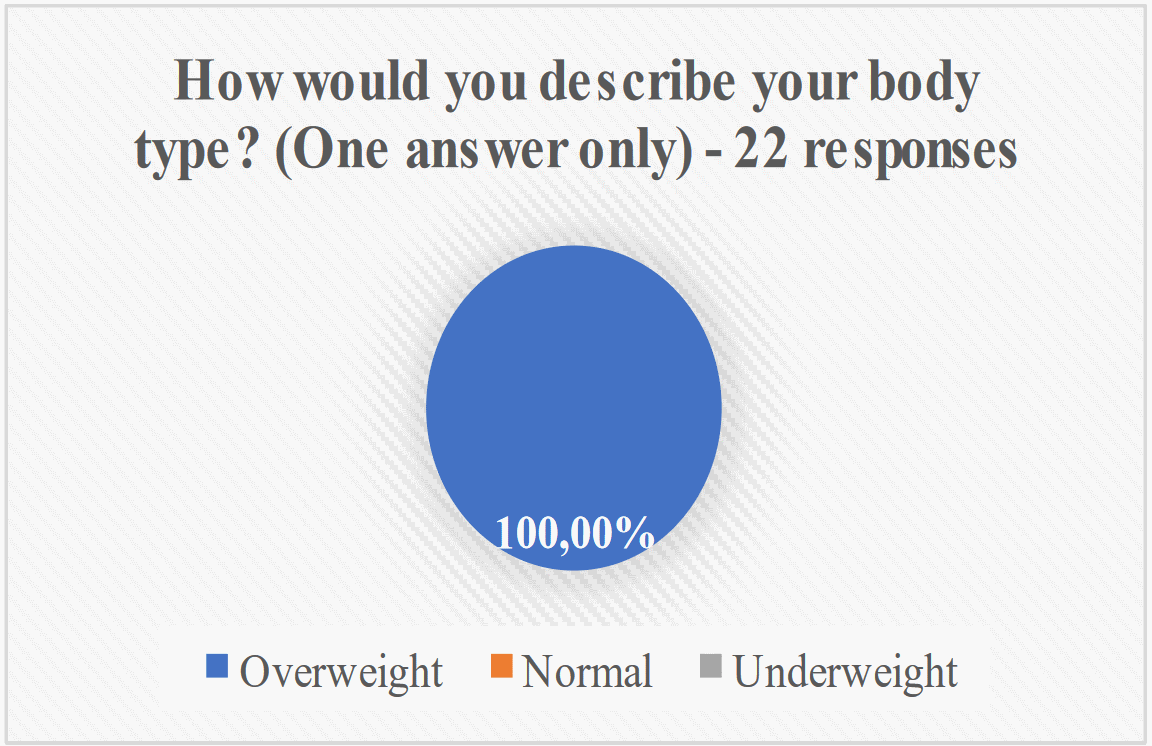
Figure 4. Self-awareness of the participants about t heir physique
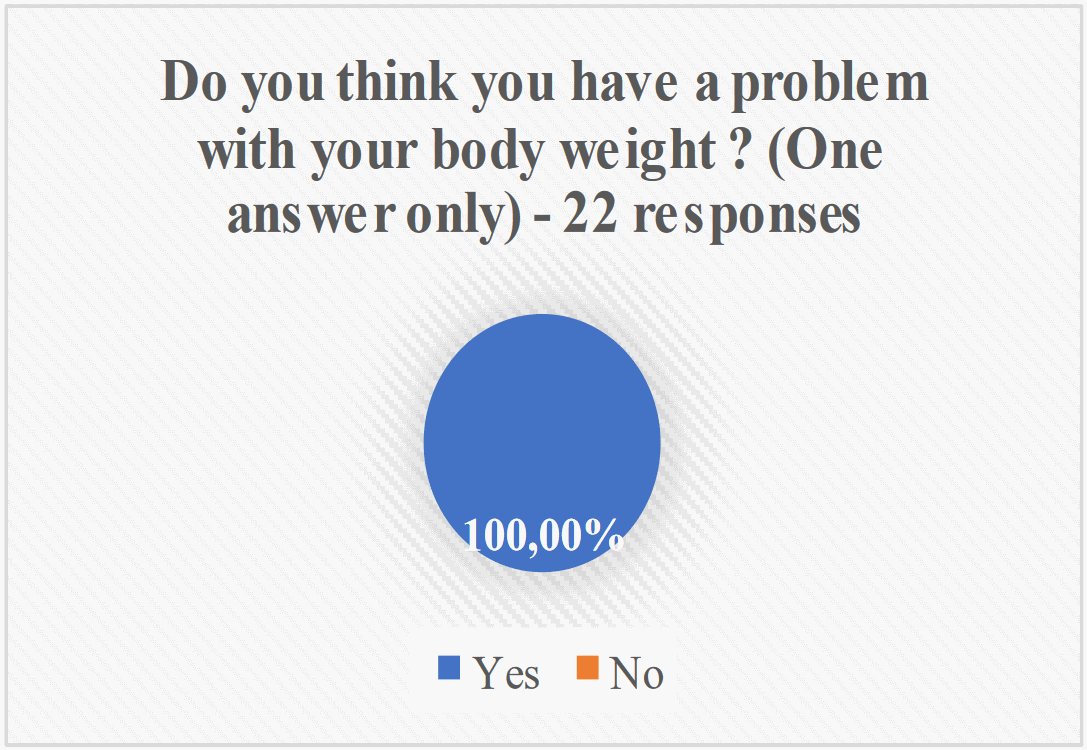
Figure 5. Self-awareness of the participants about their potential weight problems
Similar to Figure 4, Figure 5 represents that all our participants answered that they have a weight problem.
Sport is one of the most popular approaches for overcoming stress and unfortunately
63.6% of the participants declared that they were not habitually involved in any kind of sports activities.
Figure 6. Physical activity profile of the participants
95.4% of our participants think that they are fully informed or rather informed about the main principles of healthy eating. However, stress and lack of time had deprived them of applying that knowledge in their lives.
Figure 7. Level of awareness of the participants about the main principles of healthy eating
The question in the next figure targets the holistic side of the Mind and Body connection towards healthy wellbeing. Regrettably, similar to the one of the previous questions on Figure 6, most of our respondents (61.9%) declared they don't meditate.
Discussion
This article presents in detail the findings of our research, regarding the true state of modern, expatriate, Bulgarian women during the COVID-19 pandemic. The women in this study are educated, live in a foreign country, seeking more opportunities and better lives. They have to work long hours to support their families and take care of the upbringing of their children. Interestingly, they are informed about the main principles of a healthy lifestyle, but for different reasons were not able to adhere to them. In our opinion, stress and overworking have contributed to their overweight and obesity problems. Our results corroborate those of other authors about morbidity levels of working women in the modern world: \(70 \%\) of the participants declare that they have one or more illnesses (Hu et al., 2001). According to their answers, if it weren’t for the pandemic, during which they were forced to stay at home and therefore slow down their habitual pace of life, they would not have been able to do anything about their wellbeing. On the other hand, they feel motivated to change their habits: nearly \(90 \%\) of the participants said that the main motivation for participating in the research is the improvement of their health. We found that women are now aware that their obesity makes them more vulnerable to the deadly virus and are determined to take measures to rectify their condition by participating in our main research, which is based on a holistic mind and body approach that involves improved diet, more physical activities and mindfulness and meditation practices. In support of the above is also Breukelman, et al, (2018) who in his review article, describes in great detail the benefits of physical activity, walking, diet and the effects on the body of these activities, both in obesity and in people with proven type 2 diabetes.
The COVID-19 pandemic has affected people from many countries, in many geographical locations. These circumstances require people to pay attention to managing their mental health and psychosocial well-being during this time along with their physical health \({ }^{2}\) ). The findings of our research concur with the WHO’s position.
The coronavirus pandemic is an enormous problem, without precedent in the recent history of mankind. Around the world, people get ill and die, schools close, hospitals are overwhelmed, employees lose their jobs, businesses collapse, and countries have to spend billions on medical aid, and social welfare support. Irrespective of the tragedy, we think that the situation could bring some positive effects as well: it could open some unique opportunities for certain people. Some individuals have more time to rethink their habits and routines and make some healthy, positive changes.
In conclusion, in our opinion, acquiring knowledge and having awareness about how to achieve a healthy lifestyle is not enough in the modern world. People in developed countries are usually working long hours, women are dealing with all areas of life, accumulating stress, which in turn makes them overweight and obese, sick and unhappy. Furthermore, we found a strong and significant correlation between the forced isolation and improvement of lifestyle choices and health. Therefore, we believe that there is a solution:
Slow down, reflect, reconnect.
NOTES
1. World Health Organisation. (2015). Media Centre: Obesity and overweight. http://www.who.int/mediacentre/factsheets/fs311/en/ Retrieved 6/1, 2015
2. World Health Organisation. (2020). Mental health and psychosocial considerations during the COVID-19 outbreak, https://apps.who.int/iris/ bitstream/handle/10665/331490/WHO-2019-nCoV-MentalHealth-2020.1-eng. pdf, Retrieved 03/18. 2020
REFERENCES
Adam, T. & Epel, E. (2007). Stress, eating and the reward system. Physio Behave, 91: 449 – 458.
Alexandros, M., Heraclides, T., Daniel, R., Witte, E. & Brunner, C. (2012). Work Stress, Obesity and the Risk of Type 2 Diabetes: Gender‐Specific Bidirectional Effect in the Whitehall II Study. doi: 10.1038/oby.2011.95
Bertrand, M. (2013). Career, Family, and the Well-Being of College-Educated Women, American Economic Review, Vol. 103, No. 3, May, pp. 244 – 50.
Brown, J. & Wimpenny, P. (2011). Developing a holistic approach to obesity management. doi: 10.1111/j.1440-172X.2010. 01899.x
Breukelman, GJ., Du Preez, CJ., Djarova-Daniels, T. & Basson, AK. (2018). The Effects of a Low-Carbohydrate High-Fat Diet and Physical Exercise on Type 2 Diabetic Patients: A Review. Journal of Applied Sports Sciences. 2018, Vol.1, pp. 70 – 87. DOI: 10.37393/jass.2018.01.9
Currie, J. (2007). Motherhood, stress and the exercise experience: freedom or constraint. doi: 10.1080/0261436042000251987
Cuschieri, S. & Mamo, J. (2016). Getting to grips with the obesity epidemic in Europe, doi: 10.1177%2F2050312116670406
Dietz, W. & Santos‐Burgoa, C. (2020). Obesity and its Implications for COVID‐19 Mortality, doi: 10.1002/oby.22818
Fink, G. (2016). Stress: Concepts, cognition, emotion, and behaviour. Elsevier/Academic Press, Amsterdam.
Foss, B. & Dyrstrad, S. (2011). Stress in obesity: Cause or consequence. doi: 10.1016/j.mehy.2011.03.011
Geliebter, A. & Aversa, A. (2002). Emotional eating in overweight, normal weight, and underweight individuals. doi: 10.1016/S14710153(02)00100-9
Godsey, J. (2013). The role of mindfulness-based interventions in the treatment of obesity and eating disorders: An integrative review. 9 July, pp. 2 – 3. doi: 10.1016/j.ctim.2013.06.003
Hu, F., Manson, E., Stampfer, M., Cilditz, G., Liu, S., Solomon, C. & Willet, W. (2001). Diet, lifestyle, and the risk of type 2 diabetes mellitus in women. N Engl J Med, 345 [11]: 790 – 7.
Markova, E. & Yordanova, G. (2019). Is the sport has place in life of \(50+\) Bulgarians? National perspective from SHARE data wave 7, Sofia: Sport&Science: International Scientific Conference “Sport and Recreation”, 29.11 – 01.12.2019, Blagoevgrad, pp. 26 – 36.
Onder, G., Rezza, G. & Brusaferro, S. (2020). Case‐fatality rate and characteristics of patients dying in relation to COVID‐19 in Italy [published online March 23, 2020]. JAMA. doi:10.1001/jama.2020.4683
Vicennati, V., Pasqui, F., Cavazza, C., Pagotto, U. & Pasquali, R. (2012). Stress‐related development of obesity and cortisol in women, doi: 10.1038/oby.2009.76
Yordanova, G. (2020). The Virtual Office: New Opportunity for WorkFamily Balance in the ICT Sector in Bulgaria. Sofia: Prof. Marin Drinov Publishing House of Bulgarian Academy of Sciences. ISBN: 978-619245-031-1